
If you read my last post, you will remember the Doldrums image included a boat that isn’t sinking, but isn’t moving. Sails limp. Crew busy. Days passing. Water running low.
That is where many insolvency practitioners are heading if they ignore AI.
Not because they are poor practitioners, but because the environment has changed. The work is heavier, expectations are higher, the evidence trail is longer, recruitment is harder, and stakeholders want answers faster. Meanwhile, other firms are already finding wind.
After that post, the question I’ve been asked most is simple:
“Alright Paul. How do we adopt AI in a way that is safe, compliant, and actually useful, without turning the practice into an experiment?”
This is the practical answer.
And to be clear from the outset: this is not a “VAi-only” approach. The principles below apply to any AI tool you deploy in an insolvency practice. I’ve built VAi, so I’ll sometimes use it as an example, but the guardrails and the operating model are tool-agnostic.
(If you have not read the first post, it’s here: A prediction: IPs who don’t adopt AI are dead in the water, they just don’t know it.)
First principle: AI does not replace your judgement
Let’s start with what this is not.
AI is not a substitute insolvency practitioner. It is not a decision-maker. It is not a magic “do the case for me” machine.
Used properly, AI is a structured co-pilot that helps you draft, organise, summarise, standardise, and think more clearly under pressure.
Your value remains what it has always been:
- judgement,
- ethics,
- prioritisation,
- stakeholder management,
- negotiation,
- risk handling,
- and the ability to steer competing interests to an outcome.
AI’s job is to remove drag so you can steer.
The three-lane model: adopt safely without kidding yourself
Most AI adoption fails because firms either:
- leap straight into case-specific use without guardrails, or
- dabble on trivial tasks and conclude “it’s not for us”.
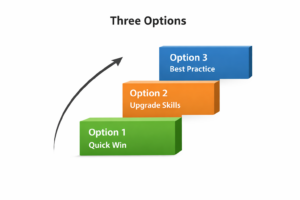
The answer is staged adoption. I use three lanes. This model works whether you are using VAi, general-purpose tools, or a mix.
Lane 1: Public, non-confidential output
This is the safest and quickest start. It gets wins without touching client data.
Examples:
- website FAQs for directors, creditors, employees,
- ‘what happens next’ guides for CVLs and MVLs,
- explanatory content for fixed-charge holders, landlords, employees,
- thought leadership blogs and newsletters,
- LinkedIn posts and case law explainers.
This lane builds familiarity and confidence with minimal risk, and it quickly improves how your firm communicates.
Lane 2: Internal, low-risk practice acceleration
This is where the operational value appears, while still keeping risk controlled.
Examples:
- first drafts of standard letters and email chasers,
- meeting agendas and structured call note templates,
- file note structures for strategy, AML/KYC, case progression, creditor issues,
- checklists (closure, handovers, statutory diaries),
- first-cut report sections that follow your house style.
In this lane, AI becomes a consistency engine. Used properly, it reduces rework and stops each team member reinventing the wheel.
Lane 3: Case-specific use, only with redaction rules and review
This is where you gain serious advantage, but only if you behave like professionals and control inputs and outputs.
Examples:
- turning a director call into a structured case note with headings and action points,
- producing a clean first draft of a creditor update based on a fact set,
- building a “missing information” list from what you have already gathered,
- stress-testing a proposed strategy by asking “what are we missing?”,
- summarising long correspondence threads into issues, decisions, and next steps.
In this lane, the rule is simple:
AI drafts and structures. The IP decides and signs off. Always.
That rule applies to VAi as much as any other AI tool.
The non-negotiables: guardrails that keep you safe
If you want adoption without headaches, put these in place early. These are not “VAi rules”. They are professional standards for any AI in an IP practice.
- Human in the loop, explicitly
AI output is always a draft. Final responsibility remains human. Make that cultural, not optional. - Redact by default for case-specific work
Client names, personal data, account numbers, addresses, unique identifiers: strip them out always. - Never paste an AI draft straight into a statutory report
Use it as a starting point. Review, correct, tailor, and ensure it reflects the actual case file evidence and decisions. - Maintain an audit trail
If AI materially contributed to a document, keep the prompt and the edited output on file. That protects you and shows professionalism. - Use AI for structure, not “truth”
AI can produce plausible nonsense if you feed it weak facts. Treat it like a bright assistant who can write well but must be supervised.
If any of this sounds heavy, good. Insolvency is heavy. Guardrails are the point.
The 14-day integration plan for an IP practice
This is not a six-month transformation programme. You can be under sail inside two weeks if you keep it practical.
Days 1 to 3: Choose three workflows that cause pain
Pick things that are frequent and repeatable. For most firms, it is one from each:
- Comms: standard letters, chasers, creditor updates
- Documentation: meeting notes, file notes, case progression notes
- Reporting: standard narrative sections, explanations, appendices
Do not pick ten. Pick three.
Days 4 to 7: Build prompts and templates in your house style
This is where the quality leap happens, regardless of which AI tool you use.
You want prompts that specify:
- audience (creditor, director, employee),
- tone (calm, factual, professional),
- structure (headings, bullet points, action list),
- what to include and exclude,
- and what assumptions not to make.
A firm with good prompts gets consistent output across the team. A firm without them gets chaos.
Days 8 to 10: Train the team using real examples
Not a demo. Practical sessions:
- take a real (redacted) case note,
- generate a first draft,
- compare it to what the firm usually produces,
- tighten the prompt,
- repeat.
The prompt improves. The team improves. The standards improve.
Days 11 to 14: Lock in standards and scale slowly
- Decide which lane each use case sits in.
- Agree “do and don’t” rules.
- Store the best prompts in a shared library.
- Review outputs for two weeks and tighten the prompts again.
Then scale to another three workflows.
This is how you move from experimenting to operating.
Week 1 starter workflow: do this before you do anything clever
If you want results without risk, do these five first. You can do them in VAi or in other AI tools, as long as you follow the guardrails.
- Director call to structured file note
Turn messy notes into a clean, consistent structure:
- facts,
- risks,
- options discussed,
- decisions made,
- information required,
- actions and ownership,
- next contact date.
- “Missing information” extractor
Feed the AI what you already know (redacted) and ask it to identify:
- missing documents,
- unanswered questions,
- inconsistencies,
- stakeholder issues not yet addressed.
This alone improves case quality and reduces rework.
- Creditor update drafting
Provide a fact pack and have the AI produce:
- a short update,
- expected next steps,
- likely timescales,
- what creditors can and cannot expect.
Then you revise and issue.
- Standard letters and chasers
Low glamour, high value. Consistency improves. Time waste drops. Staff stress drops. - Junior training accelerator
Ask the AI to explain:
- why a step exists,
- what risk it controls,
- what evidence you need on file,
- how to write it up properly.
It does not replace training, but it speeds it up and improves consistency.
Copy and paste prompt pack (again, tool-agnostic)
Use these as starters. Tighten them over time. They work in VAi or any other AI tool.
Prompt 1: Structured case note
“Turn the following notes into a structured insolvency case file note. Use headings: Background, Key Facts, Risks/Red Flags, Options Considered, Advice Given, Decisions, Information Required, Actions (Owner/Deadline), Next Steps. Keep it factual. Do not invent details. Here are the notes: [paste].”
Prompt 2: Missing info checklist
“Based on the following case summary, produce a list of missing information and documents needed to progress the case. Categorise into Urgent (48 hours), Soon (7 days), Later. Do not assume facts not provided. Case summary: [paste].”
Prompt 3: Draft a creditor update
“Draft a creditor update for a UK company liquidation based on the facts below. Tone: calm, professional, plain English. Include: what has happened, what is being done now, expected next steps, likely timescales, and a short Q&A of common questions. Do not add legal advice beyond general explanation. Facts: [paste].”
Prompt 4: Standard letter first draft
“Draft a first version of a letter to [creditor/director/employee] about [topic]. Use a factual, courteous tone. Use clear headings. Include a short action list at the end. Do not make assumptions. Inputs: [paste facts].”
Prompt 5: Quality check
“Act as a senior IP reviewing this draft. Identify ambiguities, missing facts, compliance risks, and tone issues. Suggest improvements, but do not rewrite the entire document unless asked. Draft: [paste].”
The real benefit: capacity without cutting corners
When AI is integrated properly, the firm does not become sloppy. It becomes steadier.
- Documents become more consistent.
- Team members stop reinventing the wheel.
- Quality improves because structure improves.
- People spend less time on grind and more on judgement.
- Directors and stakeholders get faster, clearer communication.
- Stress reduces, not because insolvency becomes easy, but because pointless drag drops away.
That is what “under sail” looks like.
If you do one thing this week
Do not overthink this.
Pick one workflow that wastes time and causes frustration. Build one good prompt for it. Run it with a human review. Measure time saved. Tighten the prompt. Repeat.
That is how you escape the Doldrums.
Hashtags
#Insolvency #InsolvencyPractitioner #AI #LegalTech #BusinessRecovery #Turnaround #PracticeManagement #Compliance #Productivity #Ethics #HumanInTheLoop
Try VAi now: https://vaisolutions.co.uk
IP licensing enquiry: mailto:paul@vaisolutions.co.uk